August 22, 2025
By Maria Paredes
Strong readers and writers often develop their literacy skills at home before beginning formal education. Families lay the foundation—sometimes intentionally, sometimes through everyday routines—by exposing children to storytelling, songs, reading for enjoyment, and meaningful conversations, all of which foster a rich environment for literacy development.
Schools can build on these strengths by connecting family practices with classroom instruction so that students see literacy as a fluid and collaborative effort. Instead of adding new tasks, existing events—such as curriculum nights or parent–teacher conferences—can be redesigned to emphasize literacy and provide families with meaningful strategies.
This post shares tips that schools and districts can use to leverage families for literacy success.
Equip Teachers to Be Family Literacy Coaches
Families don’t need to be literacy experts. They need guidance, encouragement, and simple strategies from the people who know their children’s learning best—teachers! Teachers and family-facing staff need professional learning, planning time, and ready-to-use tools that fit the rhythm of their daily work.
Effective support should help teachers
- communicate literacy goals clearly,
- model strategies families can use at home, and
- build classroom cultures that embrace families as partners.
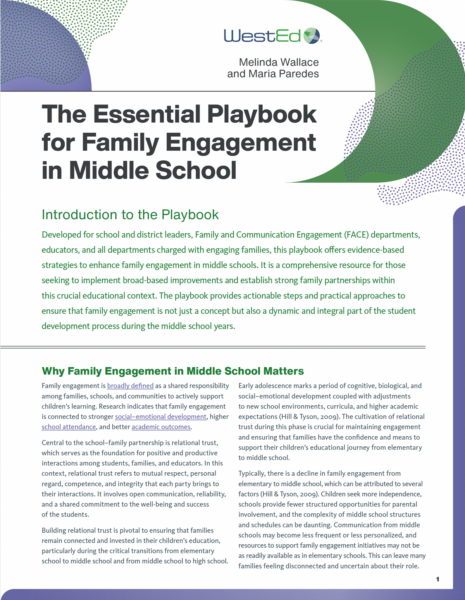
Resources such as WestEd’s Family Engagement Essentials give teachers the confidence and skills to engage families in ways that are consistent across classrooms and inclusive of all communities.
Providing thoughtfully designed resources—take-home activities, workshop templates, and multilingual communication tools—ensures that every family has access to meaningful opportunities to support literacy. For example, these easy-to-use guides help families and educators work together to support early literacy development in children from preK through Grade 3 and Grades 4–8. The guides are also available in Spanish.
When schools invest in this kind of teacher capacity, family engagement can become a schoolwide norm. The result is genuine collaboration between teachers and families that fuels student growth in reading and writing.
Create a Family Literacy Learning Plan
To develop a strong family literacy plan, schools can repurpose what’s already in place—curriculum nights, book fairs, or parent–teacher conferences—and weave literacy into those experiences. This approach keeps the focus on learning while making engagement sustainable for educators.
Each grade level should map out a simple plan that identifies the following:
- a schedule for family learning events
- the literacy goals for each event
- interactive elements that let families practice strategies with their children and other families
- take-home resources that extend learning beyond the event
Aim to host at least one literacy-focused workshop per quarter. Between events, keep families engaged through two-way communication that is timely, clear, and practical. For example, a shared digital space can give families an easy way to ask questions, post ideas, or share photos of literacy activities at home.
When family engagement is organized this way, it becomes a natural extension of the school’s literacy priorities. The result is a steady rhythm of partnership that strengthens both classroom learning and home practices.
Follow Up With Families Throughout the Year
Consistent communication with families should continue beyond scheduled events. Follow-up provides families with the encouragement and clarity they need to implement strategies at home and shows that their efforts are needed and appreciated.
Strong follow-up communication should be
- in the family’s preferred language;
- aligned with strategies introduced at workshops; and
- short, clear, and easy to act on.
Examples:
- This week we focused on identifying the main idea in nonfiction texts. Ask your child about the animal they researched and share what surprised you. Send a photo if they draw or write about it at home.
- Your child brought home a Reading Fluency Practice Card. Try it together! Reply with a 👍 when you’ve tried it, or let me know if you’d like a model video.
- Thanks for joining our Family Writing Workshop! Which part was most useful, or what will you try at home? Your feedback helps us plan future sessions.
When communication is consistent and reciprocal, families shift from being occasional supporters to trusted partners in literacy growth.
How WestEd Can Help Schools Work With Families
Literacy development happens around kitchen tables, in car rides, at bedtime, and in countless everyday conversations. When schools recognize and build on the strengths families bring, they can create more opportunities for student learning.
WestEd’s Family Engagement Services collaborates with schools and districts to develop family engagement plans, strengthen teacher skills, and provide tools that ensure family engagement is effective and sustainable.
Contact family engagement expert Maria Paredes if your school or district is ready to strengthen literacy by linking home and classroom practices.
About the Author
Maria Paredes is a national expert in family and community engagement with a focus on advancing the quality and impact of partnerships among families, educators, and the community to support student achievement and school improvement.
More Related to This Post
Insights & Impact





Resources
Browse our high-quality publications and resources designed to inform and engage professionals in a variety of fields including K–12 education, early childhood, and health and justice.